

Contact person:Wang Lingli (Manager)
Contact information:13968328508
Email:wll@nbchengdi.com
Add:Room 1202, Huia International, No. 1107 Tian Tong North Road, Yinzhou District, Ningbo City
Landline number:0574-87267001
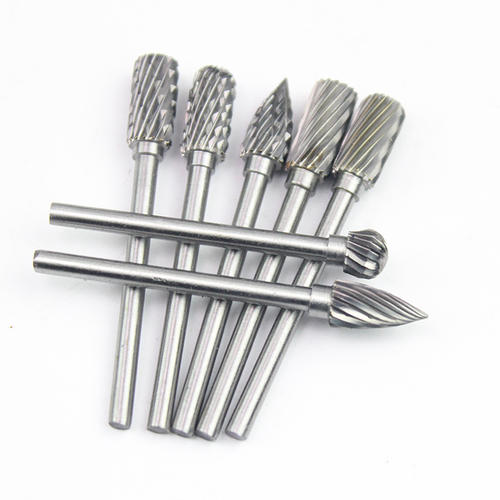
Solid carbide milling cutters are widely used due to their small dimensional tolerances. However, since the cutting edges cannot be replaced immediately, most of them are scrapped when the cutting edge breaks, significantly increasing production costs. Next, I will analyze the reasons for the wear of solid carbide milling cutter edges.
Characteristics of the machined material
When milling titanium alloys, due to their poor thermal conductivity, chips easily adhere to the cutting edge or form built-up edges, creating high-temperature zones on the rake and flank faces near the cutting edge. This causes the cutter to lose hardness and intensifies wear. During continuous milling at high temperatures, the adhered and welded materials are subjected to impact from subsequent machining, and in the process of being forcibly removed, they take away some of the tool material, resulting in damage and wear to the solid carbide milling cutter. Additionally, when the milling temperature reaches above 600°C, a hardened layer forms on the surface of the part, causing significant wear to the cutter. Titanium alloys have a low modulus of elasticity and large elastic deformation, and the surface of the workpiece near the cutting edge has a large rebound force. Therefore, the contact area between the machined surface and the flank face is large, leading to severe wear.
Normal wear
In normal production, when the continuous milling of titanium alloy parts reaches a volume of 15mm-22mm, severe cutting edge wear occurs. Continued milling becomes highly inefficient, and the surface finish of the machined parts is poor, failing to meet production and quality requirements.
Improper operation
During the production of titanium alloy casting components such as housings and covers, improper operations such as unscientific clamping, unsuitable milling depth, excessively high spindle speed, and inadequate cooling can cause the cutter to experience chipping, wear, and breakage. In addition to being unable to perform effective milling, these damaged cutters can also cause surface defects such as a dull and concave appearance on the machined surface due to "biting" during the milling process. This not only affects the machining quality of the milled surface but can also lead to the scrapping of the machined parts in severe cases.

24-Hour Hour Hotline
Contact person | Wang Lingli (Manager) |
Contact information. | 13968328508 |
wll@nbchengdi.com | |
Add | Room 1202, Huia International, No. 1107 Tian Tong North Road, Yinzhou District, Ningbo City |
Landline number | 0574-87267001 |





